
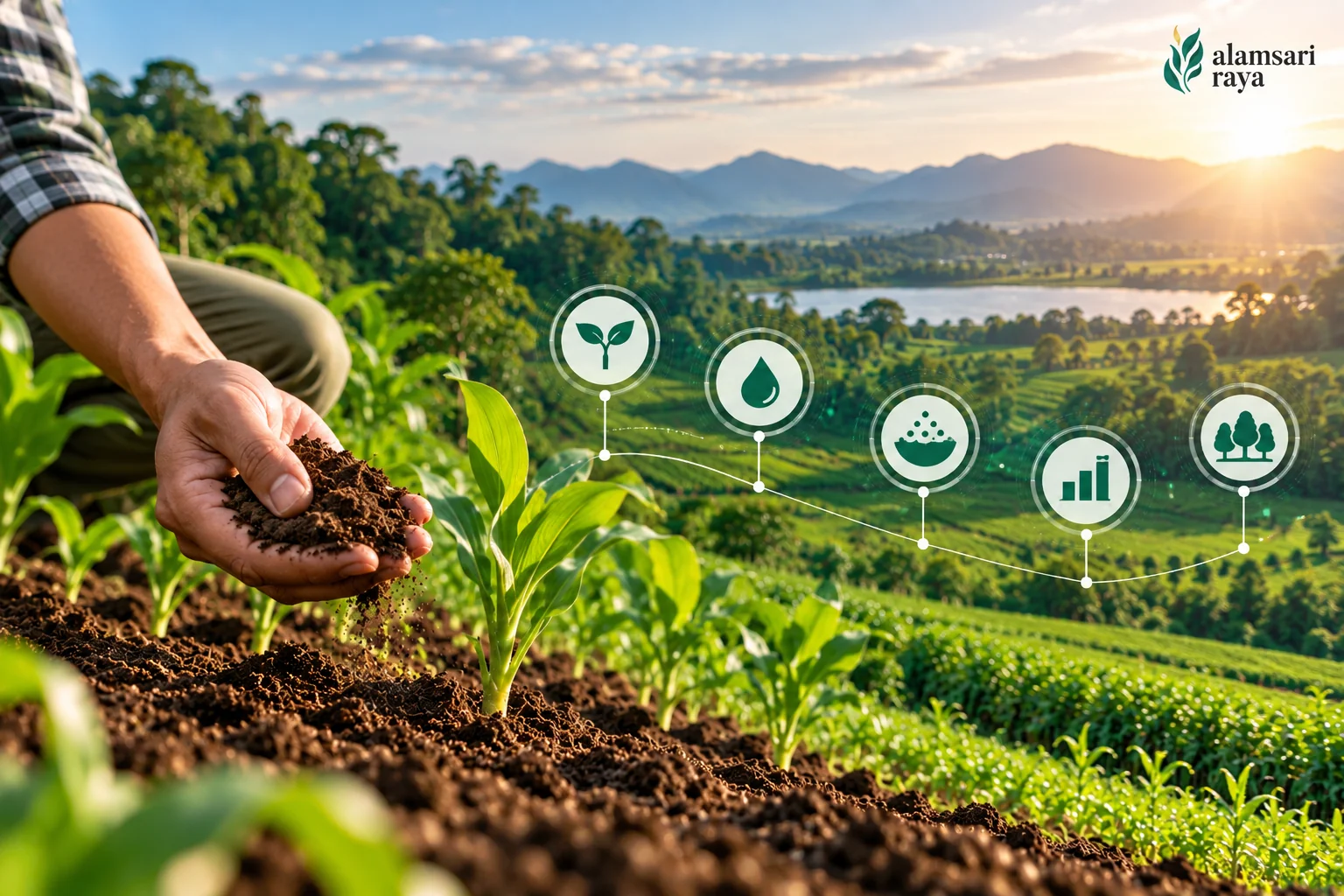
Calling a farm regenerative should start a conversation about results. What condition is the land in now? What will change? How will we know? These questions matter because a practice can sound attractive while producing different outcomes on different farms.
Newton et al. (2020) found that definitions of regenerative agriculture vary between the practices used and the outcomes sought. Giller et al. (2021) also stress the need to examine agronomic assumptions in their local context.
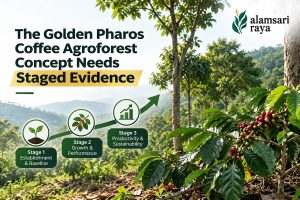
Together, these perspectives support a practical discipline: describe the intended improvement, record the starting condition and test whether the management change helps.
For a coffee agroforest, we propose starting with a small set of observable indicators. Record soil condition, ground cover, plant survival, harvested output, input use and the cost of carrying out the work. Include the people who do the work: a farming system must also be manageable for its workers and meaningful for the households involved.
The first measurement does not need to be impressive. A baseline might reveal uneven establishment, exposed soil or an expensive maintenance task. Its value lies in making the next decision clearer. If one part of a plot performs poorly, compare its drainage, shade, soil and planting material before attributing the problem to the whole farming approach.
We recommend giving each indicator a method and a review date. Ground cover photographs should come from fixed positions. Survival counts should use the same plot boundary. Production figures should identify whether the product is fresh cherry, parchment or green coffee. Cost records should include labour that is easily overlooked when work is done by family members.
This also changes how progress should be communicated. “We retained more ground cover this season” is a management statement. “Soil condition improved” requires evidence of what was measured and when. The two statements can be connected, but the connection should be tested rather than assumed.
Alamsari’s proposed approach is to make regeneration understandable through records that readers can inspect.
Each farm will need an appropriate technical plan, but every credible claim can begin with the same question: compared with what? A clear starting point makes learning possible and gives future achievements a sound foundation.